
What a Custom HDC Connector Manufacturer Does: Definition, Analogy, and How It Works
2026-10-14
A custom HDC connector manufacturer builds heavy-duty rectangular connector systems — inserts, hoods, housings and contacts — to fit a specific machine, panel or cable instead of only selling fixed catalog parts. This guide defines the term in plain language, explains the modular insert-and-housing concept, corrects common misconceptions, and gives practical examples plus a short FAQ.
Direct answer: what is a custom HDC connector manufacturer?
A custom HDC connector manufacturer produces heavy-duty connector (HDC) systems — the rugged rectangular plugs used on machinery — and adapts them to a customer's specific pin count, voltage, cable entry and mounting layout. Standard HDC parts follow fixed catalog sizes. A custom manufacturer works from those same modular building blocks but changes the insert configuration, the wiring, or the assembly so the finished connector fits one particular machine instead of a general-purpose average.
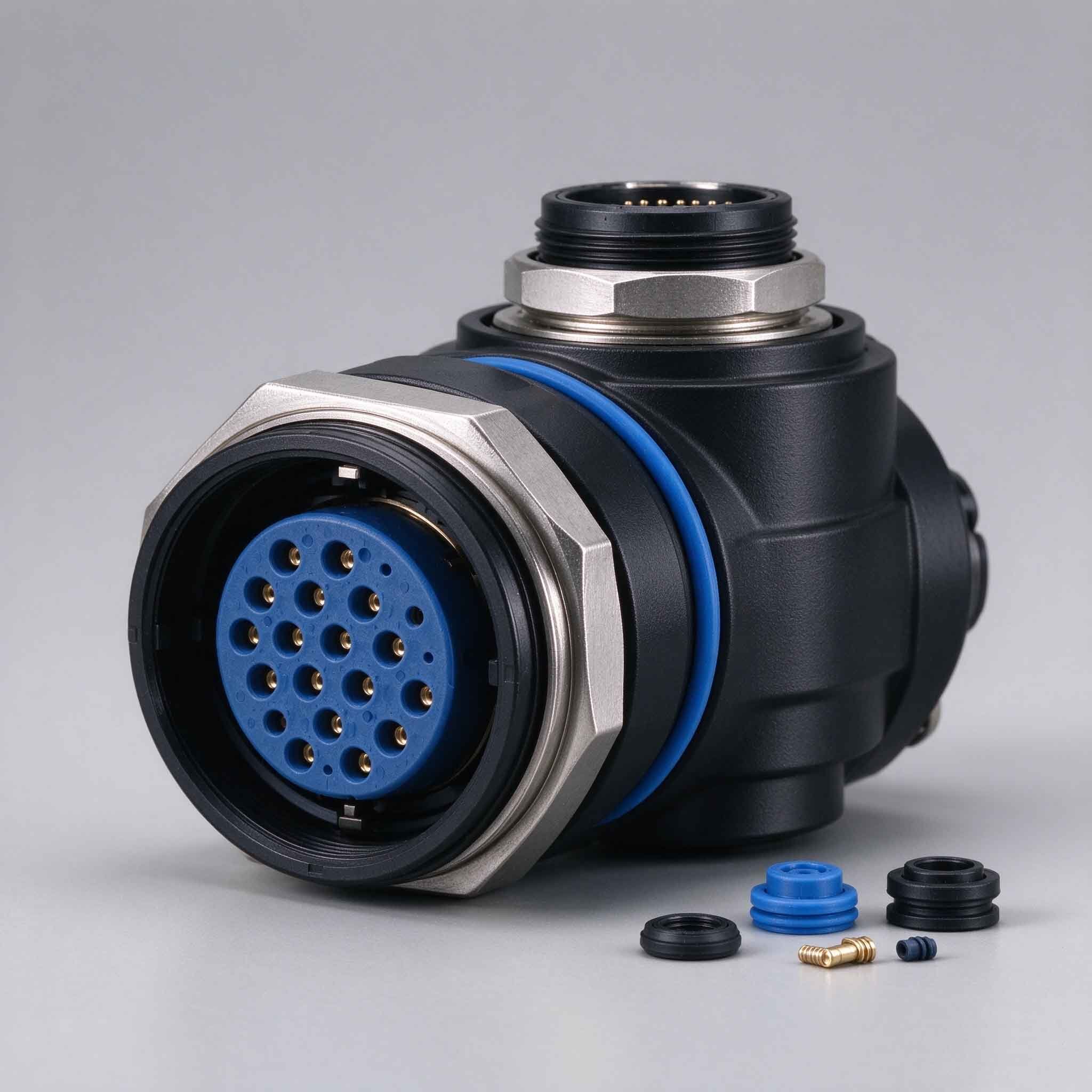
"Custom" here rarely means a brand-new shape invented from nothing. It normally means configuring proven components: a heavy duty connector insert, a matching hood and housing, contacts, seals and a custom wiring harness terminated to the customer's pinout. That is why custom work is often faster and less risky than it sounds.
Linkwell Industrial Connect, for example, publishes a Heavy Duty HDC Male Insert (Model No. HDC-HE-024-MI, 24 Pin, 500V AC) inside its own Rectangular Heavy‑Duty Connectors category — a catalog item that can serve as the starting point for a customized assembly.
One analogy that makes it click
Think of HDC connectors like electrical LEGO for factories. A standard box of LEGO gives you fixed bricks; a custom build still uses those same bricks, just arranged for one model. The insert is the brick grid (it holds the pins), the hood and housing are the outer shell that locks the assembly together, and the contacts are the studs that carry current. A custom connector manufacturer reads your drawing and decides which bricks to combine — without inventing a new plastic.
That analogy also explains the benefit: because parts are modular and interchangeable, a damaged insert can be swapped without rewiring the whole machine, and a design change often means changing one insert rather than a whole connector family.
How the custom process actually works
The workflow is more engineering dialogue than manufacturing magic. A typical sequence:
- Interface definition. You state pin count, working voltage, current per contact, signal type (power, data, sensor) and environment (vibration, washdown, oil mist, temperature range).
- Connector family selection. Rectangular HDC suits high pin counts and cabinet-to-machine links. When a round threaded interface fits better, an M12 circular connector or M23 circular connector may be chosen. Inside a device, a wire to board connector or spring terminal connector often handles the final PCB or DIN-rail landing.
- Insert and contact layout. Pins are assigned, then the insert is matched to a hood and housing with the right cable entry and locking lever or screw.
- Termination choice. Crimp, screw or spring-cage termination changes assembly time, field serviceability and vibration resistance.
- Harness build and test. The custom wiring harness is cut, terminated and continuity-checked against the drawing before shipment.
Whether a supplier can do all these steps in-house varies; ask which stages are internal and which are outsourced.
Common misconceptions, corrected
- "Custom means expensive and slow." If the change is limited to pinout, cable length or insert selection, cost and lead time often stay close to standard because tooling already exists. Genuinely new housings are the slow, costly case.
- "HDC is just a big plug." HDC is a system: insert, hood, housing, contacts, seals and cable glands must all match. Mixing brands can break sealing and mechanical locking.
- "Higher pin count always means better." More pins reduce current per contact and complicate wiring. Match pin count to the actual signal and power list.
- "Any connector works outdoors." Rated voltage and current say nothing about water, dust or corrosion resistance. Those depend on the assembled hood, housing and sealing arrangement.
- "A sample proves the whole capability." One good sample shows one configuration, not a supplier's range. Ask for the drawing, bill of materials and inspection record that go with it.
Practical examples where custom HDC pays off
A robot cell needs one disconnect between the controller cabinet and the arm. The arm carries servo power plus encoder and I/O signals, and the cable must survive repeated flexing. A 24-pin rectangular insert in a locking housing, pre-wired into a harness with a defined bend radius, removes several individual cable runs and gives maintenance one plug to pull.
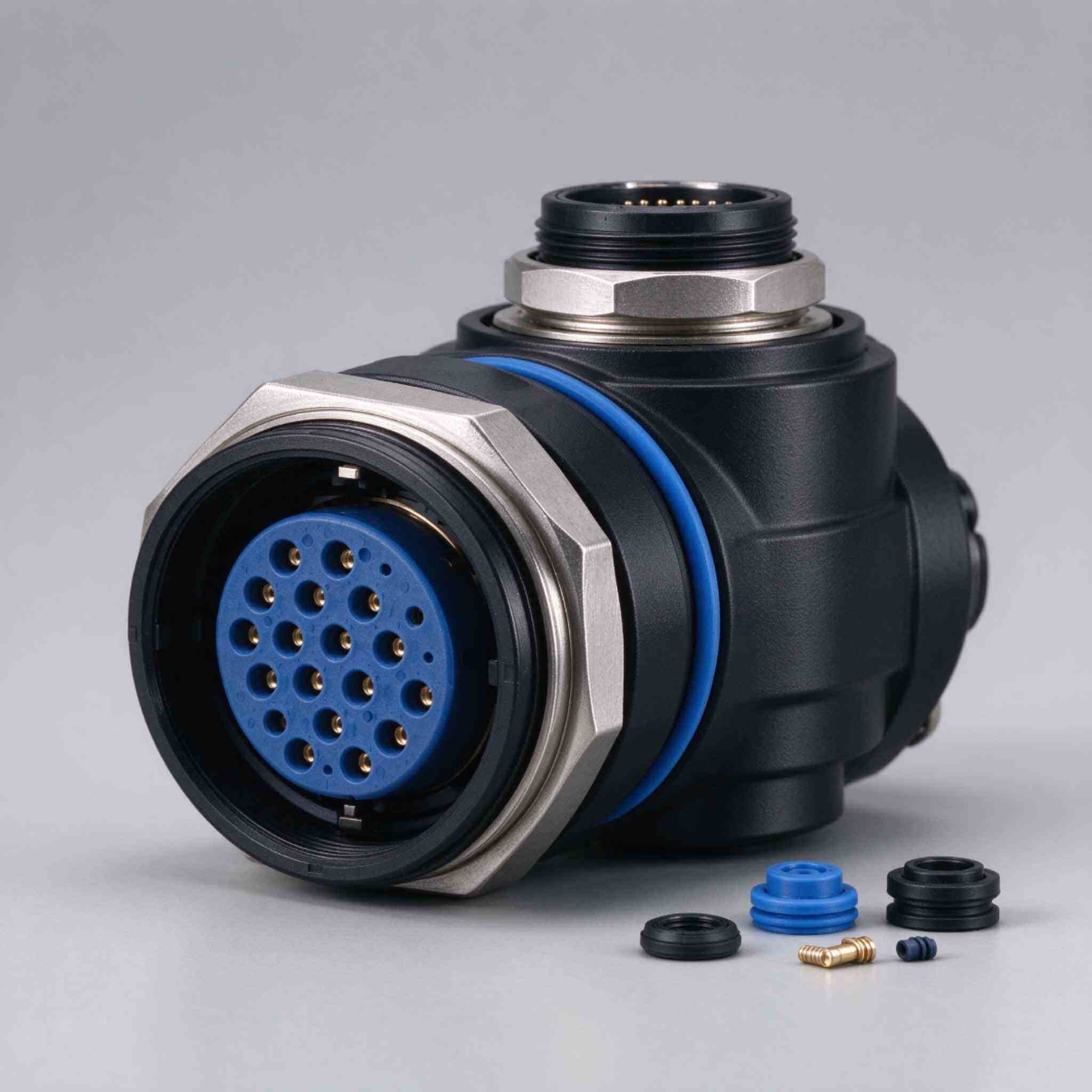
A packaging line uses an M23 threaded connection where a rectangular hood would foul the guarding. The circular body handles the torque and keeps the seal, while the panel side uses a spring terminal connector for fast, tool-light field wiring. In both cases the driver is the machine, not the connector catalog.
How to compare custom HDC connector suppliers
Compare on evidence, not adjectives. Useful criteria: whether insert, housing and contacts come from one controlled bill of materials; which termination types are offered; whether drawings and pinout documents ship with each order; how change requests are handled after the first build; and what inspection is performed before dispatch. Ask for a sample assembly with its drawing, then verify pin assignment and locking function yourself. Treat any claim about sealing, cycle life or certification as something to confirm in writing for your specific configuration.
Short FAQ
Is a custom HDC connector different from a standard one? Not in principle. It uses the same modular components, arranged to a specific pinout, voltage, current and mounting requirement.
Do I need to design a new housing? Usually no. Most custom work changes the insert, contacts, cable entry or harness while keeping an existing hood and housing.
When should I choose circular instead of rectangular? Choose M12 or M23 circular connectors when space is tight or a threaded, sealed interface is preferred; choose rectangular HDC when pin density and fast cabinet-to-machine connection matter.
What information speeds up a quote? Pin count, working voltage, current per contact, signal types, environment, cable type, mounting style and annual volume.
How do I check quality without a lab? Read the drawing against the delivered part, confirm pin numbering, test the locking and mating action, and request the inspection record for that batch.
Quick action checklist
- Write one page of requirements: pins, voltage, current, environment, mounting.
- Decide the interface family: rectangular HDC, M12 or M23 circular, or an internal wire to board or spring terminal connection.
- Ask the manufacturer which parts are catalog items and which are modified.
- Request a sample with drawing, bill of materials and inspection record.
- Verify pinout, locking and cable entry before approving series production.